
Hysteroscopy
Hysteroscopy is a specialised procedure used to examine the inside of the uterus, investigate abnormal bleeding and diagnose or treat selected uterine conditions without an abdominal incision.
What Is Hysteroscopy?
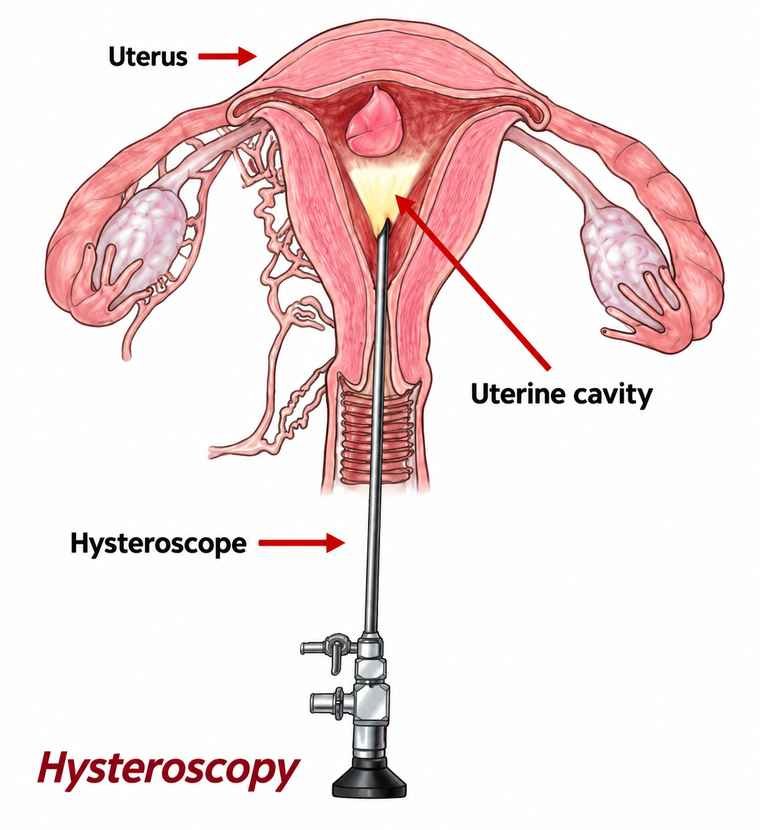
Hysteroscopy involves inserting a thin, lighted instrument called a hysteroscope through the vagina and cervix into the uterus. This allows the doctor to examine the uterine cavity directly.
Depending on the findings, hysteroscopy may be used for diagnosis, taking a tissue sample or treating certain problems during the same procedure. It generally does not require an abdominal incision.
When Is Hysteroscopy Recommended?
- Abnormally heavy or irregular bleeding
- Suspected endometrial polyps
- Selected submucosal fibroids
- Possible adhesions inside the uterus
- Assessment of certain fertility concerns
- Investigation of selected ultrasound findings
Types of Hysteroscopy
- Diagnostic hysteroscopy
- Operative hysteroscopy
- Endometrial polyp removal
- Removal of selected fibroids
- Treatment of intrauterine adhesions
- Targeted endometrial sampling when indicated
Steps Involved in Hysteroscopy
The exact process depends on whether the procedure is diagnostic or operative and whether pain relief or anaesthesia is required.
Consultation
Discuss symptoms, menstrual history, previous treatments and the reason for the procedure.
Preparation
Your doctor explains the procedure, pain relief options and any required tests or preparation instructions.
Examination
A thin hysteroscope is gently passed through the cervix to view the uterine cavity using a camera and light.
Treatment if Needed
If planned and appropriate, the doctor may take a sample or remove a polyp, selected fibroid or adhesion.
Recovery
You are monitored after the procedure. Mild cramps or light spotting may occur.
Results and Follow-Up
Your doctor explains the findings, any biopsy results and whether additional treatment is needed.
Potential Benefits
- Direct visual examination of the uterus
- Helps identify causes of abnormal bleeding
- Targeted diagnosis and tissue sampling
- May allow diagnosis and treatment together
- Usually avoids abdominal incisions
Risks and Considerations
- Temporary cramping or spotting
- Possible infection or bleeding
- Rare injury to the uterus or cervix
- Risks associated with anaesthesia, if used
- Recovery depends on the procedure performed
Do You Require Hysteroscopy?
Experiencing abnormal uterine bleeding, diagnosed with a uterine polyp, or advised to undergo further uterine evaluation? Consult a gynaecologist to understand whether hysteroscopy is appropriate for your condition.
Book a ConsultationFrequently Asked Questions
Is hysteroscopy painful?
Discomfort varies. Some people experience cramping, while others may need local anaesthesia, sedation or general anaesthesia depending on the procedure.
How long does hysteroscopy take?
A diagnostic procedure may take around 5–15 minutes, while operative hysteroscopy can take longer depending on the treatment.
Can hysteroscopy help with fertility concerns?
It may identify or treat selected uterine abnormalities that can affect fertility. Its suitability depends on your individual assessment and diagnosis.
How soon can I return to normal activities?
Many people resume routine activities within a day or two after uncomplicated diagnostic hysteroscopy. Recovery may take longer after operative procedures; follow your doctor's advice.